

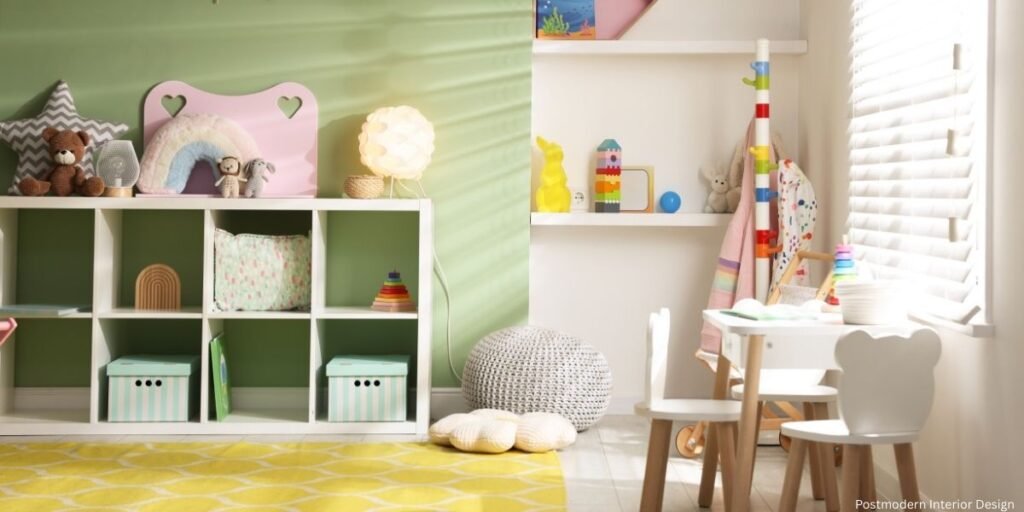

Postmodern interior design is a bold, expressive, and concept-driven design movement that emerged as a reaction against the rigid rules of modernism. Unlike minimalist or functional approaches, postmodern interior design celebrates creativity, contradiction, humor, symbolism, and individuality. This postmodern design style rejects the idea that form must strictly follow function and instead embraces visual storytelling, decorative freedom, and emotional expression. Today, postmodern interior design is experiencing a strong revival as homeowners and designers move away from sterile interiors and seek personality-driven spaces that feel artistic, layered, and unique.
At its core, postmodern interior design is not about perfection or uniformity. It is about meaning, narrative, and breaking expectations. This design philosophy allows designers to mix colors, patterns, textures, materials, and historical references in unconventional ways. The result is an interior that feels intentional yet playful, structured yet rebellious. Whether applied to a postmodern interior design living room, bedroom, or commercial space, the style encourages bold decisions and fearless creativity.
History of Postmodernism in Interior Design
The postmodernism interior design history begins in the late 1960s and early 1970s, during a period of cultural, social, and artistic transformation. Modernism had dominated architecture and interior design for decades, emphasizing simplicity, minimal ornamentation, and functional efficiency. However, many designers and architects began to feel that modernism had become emotionally cold, repetitive, and disconnected from human experience. Postmodern interior design emerged as a direct response to this dissatisfaction.
Postmodernism in interior design was heavily influenced by postmodern architecture, philosophy, and art. Thinkers like Robert Venturi challenged modernist dogma by arguing that complexity and contradiction were essential elements of meaningful design. This philosophy quickly found its way into interiors, where designers began reintroducing color, ornamentation, symbolism, and historical references. The postmodern design style rejected the idea of a single “correct” aesthetic and instead promoted pluralism and diversity.
During the 1980s, postmodern interior design gained mainstream attention through influential designers and collectives such as the Memphis Group. Their work was defined by bright colors, geometric forms, plastic laminates, and ironic visual language. Over time, postmodern interior design evolved, becoming more refined and adaptable while maintaining its core principles of expression and experimentation. Today, the postmodernism interior design history continues to influence contemporary interiors, particularly in eclectic, maximalist, and art-driven spaces.
Core Characteristics of Postmodern Interior Design
Understanding postmodern interior design characteristics is essential for recognizing and applying this style effectively. One of the most defining postmodernism design characteristics is eclecticism. Postmodern interior design deliberately mixes styles, eras, and influences that traditionally would not coexist. Classical motifs may appear alongside futuristic furniture, while vintage elements can be combined with ultra-modern materials. This intentional contrast creates visual tension and intellectual depth.
Another key characteristic of postmodern interior design is the use of bold color. Unlike modern interiors that favor neutral palettes, postmodern spaces embrace saturated hues, unexpected color combinations, and dramatic contrasts. Color is used as a tool for expression rather than subtle enhancement. Patterns also play a major role, with geometric shapes, abstract motifs, and graphic designs frequently appearing on walls, floors, and furnishings.
Playfulness and irony are central postmodernism design characteristics. Furniture and décor often include humorous or exaggerated forms that challenge traditional expectations. Asymmetry is another hallmark, with layouts and compositions that feel dynamic rather than balanced. Postmodern interior design also prioritizes decoration and symbolism over pure functionality. Objects are chosen not only for their use but for the meaning and visual impact they bring to the space.
Postmodern Design Style Elements
The postmodern design style is defined by its fearless approach to materials, forms, and visual language. One of the most noticeable elements of postmodern interior design is its sculptural use of furniture. Chairs, tables, and sofas often function as artistic statements, featuring unconventional shapes, exaggerated proportions, or unexpected colors. These pieces anchor the space and act as conversation starters.
Color schemes in postmodern interior design are intentionally disruptive. Designers often combine pastel tones with neon accents or pair deep, dramatic colors with playful highlights. This approach creates visual excitement and reinforces the expressive nature of the postmodern design style. Patterns are layered rather than matched, resulting in interiors that feel energetic and multidimensional.
Material diversity is another essential element. Postmodern interior design frequently combines materials such as plastic, marble, glass, metal, wood, and terrazzo in a single space. Texture contrast is used to stimulate the senses and add depth. Lighting also plays a key role, with statement fixtures serving as both functional elements and sculptural art pieces. Together, these elements define the unmistakable identity of postmodern interior design.
Postmodern Interior Design Living Room Examples
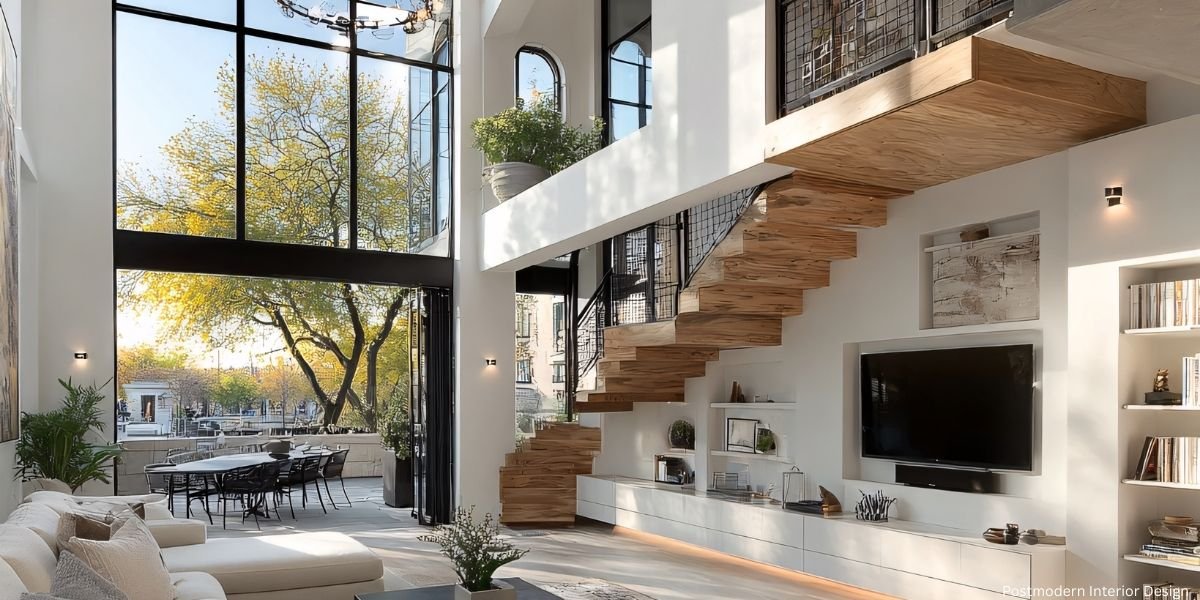
The postmodern interior design living room is often the most expressive area of the home. This space provides the perfect canvas for showcasing the core principles of postmodern interior design, including bold furniture, artistic décor, and unconventional layouts. A postmodern interior design living room typically features a strong focal point, such as a sculptural sofa, a colorful area rug, or an oversized piece of abstract art.
Layout in a postmodern interior design living room is rarely symmetrical. Seating arrangements may feel deliberately off-center, creating movement and visual intrigue. Walls are often treated as design features, with geometric wallpaper, color blocking, or graphic murals. Lighting in a postmodern interior design living room is used strategically to highlight textures, art, and architectural details, further enhancing the dramatic atmosphere.
Accessories and décor in postmodern interior design living rooms are chosen for impact rather than subtlety. Mirrors with unconventional frames, bold vases, and statement lamps contribute to a layered and expressive environment. Despite its complexity, a well-designed postmodern interior design living room maintains cohesion through intentional repetition of colors, shapes, or themes.
Best Postmodern Interior Design Ideas for Every Room
Postmodern interior design ideas can be adapted to virtually any room in the home. In entryways, bold color choices and graphic flooring create an immediate impression, setting the tone for the rest of the space. Hallways become galleries in postmodern interior design, featuring art, mirrors, and lighting that transform transitional areas into visual experiences.
In bedrooms, postmodern interior design ideas focus on comfort combined with artistic flair. Statement headboards, playful bedding patterns, and unexpected color palettes create a space that feels both personal and expressive. Kitchens and dining areas benefit from postmodern interior design ideas that challenge traditional layouts, such as sculptural islands, colorful cabinetry, and artistic backsplashes.
Bathrooms designed with postmodern interior design ideas often feature bold tiles, unusual fixtures, and contrasting materials. Even small spaces can embrace postmodern interior design by incorporating one or two strong visual elements. The key is intentionality, ensuring that each design choice contributes to the overall narrative of the space.
Mid-Century vs Postmodern Interior Design
The comparison between mid century post modern interior design and classic mid-century modern design highlights important stylistic differences. Mid-century modern interiors prioritize clean lines, organic forms, natural materials, and functional simplicity. In contrast, postmodern interior design embraces exaggeration, ornamentation, and conceptual expression.
While mid century post modern interior design borrows some structural elements from mid-century modernism, it reinterprets them with irony and playfulness. Furniture forms may be familiar but are often distorted, recolored, or combined with unconventional materials. This fusion results in interiors that feel nostalgic yet forward-thinking.
Understanding the distinction between mid century post modern interior design and its predecessor helps designers intentionally blend elements from both styles. When done correctly, this combination creates spaces that balance structure with creativity, making interiors both livable and visually compelling.
Modern vs Postmodern Interior Design
The debate around modern vs postmodern interior design centers on philosophy as much as aesthetics. Modern interior design is rooted in minimalism, efficiency, and clarity. It values simplicity, neutral colors, and the elimination of unnecessary decoration. Postmodern interior design, on the other hand, celebrates complexity, contradiction, and individuality.
In modern vs postmodern interior design comparisons, modern spaces often feel calm and restrained, while postmodern spaces feel energetic and expressive. Modern interiors aim for timelessness, whereas postmodern interiors embrace temporality, cultural references, and personal storytelling. Neither approach is inherently superior; the choice depends on lifestyle, personality, and emotional preference.
Many contemporary interiors successfully blend modern vs postmodern interior design by using modern layouts as a foundation and layering postmodern accents. This hybrid approach offers the best of both worlds, combining functionality with creative freedom.
Common Mistakes in Postmodern Interior Design and How to Avoid Them
One of the most common mistakes in postmodern interior design is overuse of bold elements without cohesion. While the style encourages experimentation, a lack of visual hierarchy can result in chaos rather than creativity. Successful postmodern interior design requires careful curation and repetition of key themes.
Another mistake is misunderstanding postmodernism design characteristics as randomness. Every element in a postmodern space should be intentional, even if it appears unconventional. Poor color coordination or excessive pattern mixing can overwhelm the senses. Designers should balance expressive choices with neutral elements to maintain visual clarity.
Avoiding these mistakes ensures that postmodern interior design remains sophisticated rather than cluttered. Thoughtful planning and a clear conceptual direction are essential for achieving a polished result.
FAQs About Postmodern Interior Design
What is postmodern interior design?
Postmodern interior design rejects rigid rules and embraces individuality. It focuses on bold colors, playful shapes, artistic expression, and a mix of different styles, eras, and materials.
Is postmodern interior design expensive?
Not necessarily. Postmodern interior design can fit different budgets. Costs depend on your choice of materials, furniture, and décor. You can achieve the look with affordable statement pieces and creative accents.
Can modern and postmodern interior design be mixed?
Yes, modern and postmodern interior design can be blended successfully. The key is balance—use clean modern elements as a base and add postmodern features intentionally to avoid visual clutter.
Is postmodern interior design suitable for apartments or small spaces?
Absolutely. Postmodern interior design works well in small spaces when bold elements are used selectively. Statement furniture, colorful accents, or unique lighting can add character without overwhelming the space.
Conclusion: Why Postmodern Interior Design Still Matters
Postmodern interior design remains relevant because it speaks to the human desire for expression, creativity, and emotional connection. In a world increasingly driven by uniformity, postmodern interior design offers a refreshing alternative that celebrates difference and imagination. By understanding postmodern interior design characteristics, history, and practical applications, designers and homeowners can create spaces that are not only visually striking but deeply meaningful.