

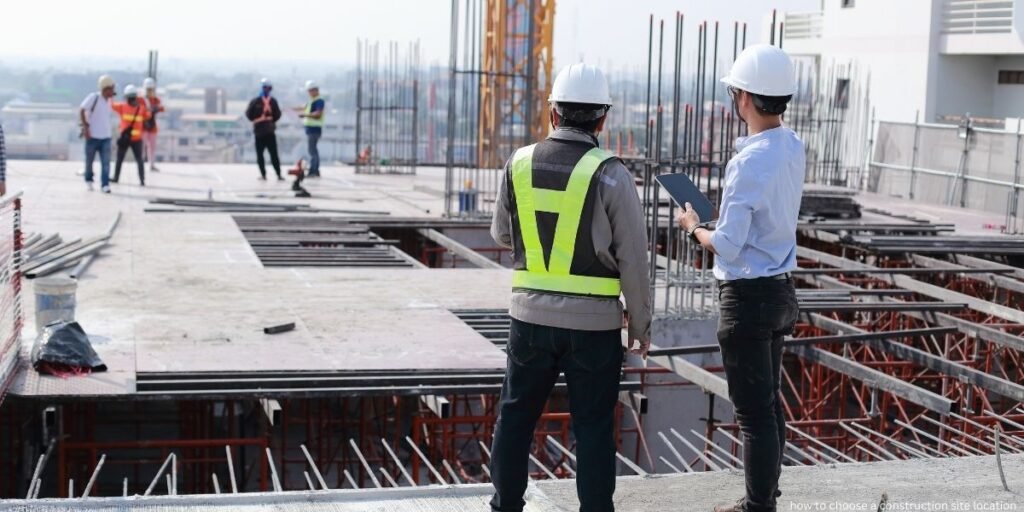

Choosing land is not just about buying property—it is about making one of the most critical decisions in any construction project. Understanding how to choose a construction site location can determine whether your project succeeds smoothly or faces delays, cost overruns, and structural risks. From residential housing to large commercial developments, construction site location selection directly impacts safety, legality, sustainability, and long-term value.
Many developers and builders underestimate the importance of site selection for construction projects. They focus on design and materials but overlook the land itself. However, poor land selection for construction can increase foundation costs, delay approvals, and even cause structural failure. This guide explains the complete construction site selection process, helping you understand what factors truly matter and how to evaluate land professionally.
What Is Site Selection in Construction?
Site selection in construction refers to the systematic evaluation of land to determine its suitability for a proposed construction project. When professionals talk about what is site selection in construction, they mean analyzing physical conditions, legal permissions, environmental constraints, and economic feasibility before construction begins.
The process of construction site location selection ensures the land can support the building structurally, legally, and financially. It is not a single decision but a multi-stage assessment that prevents future risks. Choosing the right construction site means ensuring the land aligns with project goals and long-term use.
Why Is Site Selection Important in Construction?
Understanding why site selection is important in construction is essential for every builder, investor, and homeowner. A poorly selected site can cause problems that no design solution can fix later. Weak soil conditions may require expensive foundation systems. Improper zoning may stop construction entirely. Environmental issues can result in legal penalties and delays.
Industry data shows that a significant percentage of construction delays are linked to site-related issues such as soil instability, permit problems, and poor accessibility. This is why the importance of location in construction projects cannot be overstated. A good site reduces risk, improves safety, and protects investment value.
How to Choose a Construction Site Location
When learning how to choose a construction site location, the first step is understanding your project’s requirements. Residential projects, commercial developments, and industrial facilities all have different site needs. Construction planning site selection must align land characteristics with building purpose.
The process involves studying soil conditions, topography, zoning regulations for construction, environmental impact, and infrastructure availability. Choosing the right construction site requires patience and professional analysis, not quick decisions based on price alone.

Construction Site Location Selection Process Explained
The construction site selection process begins with identifying suitable land options based on size, location, and accessibility. Once potential sites are shortlisted, a detailed construction site feasibility analysis is conducted. This analysis examines whether the land can support the project technically, legally, environmentally, and financially.
After feasibility confirmation, professionals conduct site analysis for construction projects, including soil testing for construction sites, land surveys, and environmental impact assessments. Risk assessment in site selection follows, identifying flood risks, seismic zones, and legal disputes. Only after these steps can a final construction site location be selected with confidence.
Factors Affecting Construction Site Selection
Several factors affecting construction site selection must be carefully evaluated. Soil condition is one of the most critical factors because it determines foundation type and cost. Accessibility influences material transportation and labor movement. Zoning regulations define what can legally be built on the land.
Environmental considerations, such as protected areas and water bodies, also affect construction site location factors. Utility availability at the construction site—including water, electricity, gas, and sewage—plays a major role in cost planning. Each of these factors contributes to choosing the right construction site.
Site Selection Criteria in Construction Projects
Professionals follow defined site selection criteria in construction to avoid subjective decisions. These criteria include land stability, compliance with local building codes and permits, infrastructure availability, environmental sustainability, and economic viability.
Using proper site selection criteria in construction ensures consistency and accuracy in decision-making. It also reduces uncertainty during construction planning and execution.
Construction Site Feasibility Analysis
A construction site feasibility analysis evaluates whether a site is suitable before major investment. This analysis covers technical feasibility, such as soil strength and drainage, and legal feasibility, including zoning and ownership verification. Financial feasibility assesses whether development costs align with project budget.
Many developers rely on construction feasibility study consultants to conduct these evaluations professionally. Their expertise prevents costly mistakes that often arise from incomplete analysis.
Land Selection for Construction
During land selection for construction, buyers must verify land ownership, legal documentation, and access rights. Overlooking these aspects can result in disputes that halt construction indefinitely.
Factors to consider before buying land for construction include surrounding development, future infrastructure plans, and environmental restrictions. Proper land evaluation services for builders help identify hidden issues early.
Site Analysis for Construction Projects
Site analysis for construction projects involves a detailed examination of land characteristics. This includes topography and drainage analysis, which determines how water flows across the site. Poor drainage can weaken foundations and cause long-term damage.
Land survey for construction identifies boundaries, elevations, and existing structures. These details are essential for accurate design and cost estimation.
Soil Testing and Its Impact on Construction
Soil testing for construction sites determines bearing capacity and soil composition. Many people ask, how does soil type affect construction? The answer lies in foundation performance. Clay soils expand and shrink, sandy soils drain well but may lack stability, and rocky soils offer strength but increase excavation costs.
Understanding how soil condition affects construction site selection helps engineers design appropriate foundations and avoid future settlement problems.
Environmental Impact Assessment and Regulations
An environmental impact assessment evaluates how construction will affect surrounding ecosystems. Many regions require environmental clearance before issuing permits. Ignoring this step can stop projects permanently.
Zoning regulations for construction define land use categories such as residential, commercial, or industrial. Compliance with zoning regulations and local building codes and permits is mandatory for legal construction.
Accessibility, Utilities, and Infrastructure Availability
Site accessibility for construction affects transportation costs and project timelines. Sites with poor road access increase logistics expenses. Infrastructure availability, including water supply, electricity, drainage, and communication networks, directly impacts development cost.
Utility availability at construction site should always be confirmed before land purchase. Infrastructure gaps often result in unexpected expenses.
Risk Assessment in Site Selection
Risk assessment in site selection identifies potential threats such as flooding, earthquakes, land disputes, and environmental restrictions. Professional construction site risk assessment services evaluate these risks using data and expert analysis.
Risk-aware site selection protects investments and ensures long-term stability.
Residential and Commercial Site Selection
The best location for residential construction prioritizes safety, soil stability, access to schools and healthcare, and environmental quality. Residential site selection focuses on livability and long-term value.
In contrast, site selection for commercial construction projects emphasizes visibility, accessibility, customer flow, and infrastructure. Commercial success depends heavily on location choice.

Construction Site Selection Checklist
A construction site selection checklist ensures no critical step is missed. It includes soil testing, zoning approval, utility verification, environmental clearance, legal documentation, and risk assessment. Using a checklist simplifies decision-making and improves accuracy.
Professional Construction Site Analysis Services
Many developers choose construction site analysis services for accurate evaluation. These services include geotechnical survey services, environmental assessment services for construction, and land suitability assessment for construction.
Hiring professionals ensures reliable data and informed decisions.
Cost of Construction Site Feasibility Study
The cost of construction site feasibility study varies depending on land size, location, and testing requirements. Typically, it represents a small percentage of the total project cost but saves significant money by preventing errors.
Final Thoughts: Build on the Right Foundation
Understanding how to choose a construction site location is essential for successful construction. From soil testing and zoning compliance to environmental assessment and risk analysis, every step matters.
A well-selected site ensures safety, reduces costs, and protects long-term value. Whether you are planning a home or a commercial building, never underestimate the power of smart site selection.
Call to Action
If you need professional site analysis for construction projects, construction feasibility study consultants, or expert site selection consulting services, make the right choice before you build.
Hire experienced construction planning consultants today and secure your project’s future with confidence.